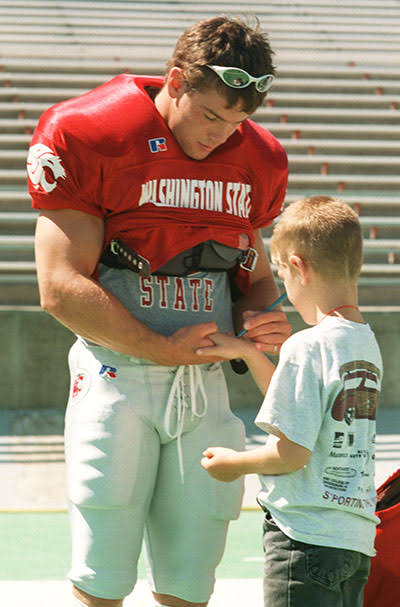

I remember the first time I came across Steve Gleason’s story. I expected to read about a former football player and his career, but I ended up thinking about something much bigger: what does it really mean to keep moving forward when life changes completely?
Steve Gleason is best known as a former NFL player for the New Orleans Saints, but his life after football has made him an even more remarkable figure. His journey with ALS, advocacy work, family life, and determination has inspired people far beyond the world of sports.
His story isn’t simply about illness or football. It is about finding purpose when the path ahead looks completely different from what you imagined.
Who Is Steve Gleason?
Steve Gleason is a former professional football player who spent his entire NFL career with the New Orleans Saints. He played as a safety and became particularly memorable for a blocked punt against the Atlanta Falcons in 2006.
That moment became one of the most celebrated plays in Saints history. It also came during a period when New Orleans was rebuilding emotionally and physically after Hurricane Katrina.
For many fans, Gleason became connected with the city’s comeback.
After retiring from football, however, his life took an unexpected turn. In 2011, he was diagnosed with amyotrophic lateral sclerosis, commonly known as ALS.
Rather than allowing the diagnosis to define his entire life, Gleason began focusing on his family, advocacy, technology, and helping others living with ALS.
Steve Gleason and His NFL Career
Before becoming an inspirational advocate, Steve Gleason was a tough and dependable football player.
He joined the New Orleans Saints as an undrafted free agent in 2000. Making an NFL roster without being a highly drafted prospect is already difficult, so his career itself was an achievement.
Gleason spent several seasons contributing on special teams and defense. His biggest moment arrived on September 25, 2006.
The Blocked Punt That Became Legendary
The Saints were playing the Atlanta Falcons at the Superdome in New Orleans.
Gleason blocked a punt early in the game, helping the Saints score and setting an emotional tone for the night. The game was significant because it marked the return of the Saints to the Superdome following Hurricane Katrina.
The image of Gleason celebrating became symbolic of New Orleans’ recovery.
I think this is one of the most interesting parts of his story. Sometimes a single moment can become much bigger than the person who created it. Gleason’s blocked punt eventually came to represent hope and resilience for an entire community.
Steve Gleason’s ALS Diagnosis
In 2011, Gleason was diagnosed with ALS at the age of 34.
ALS is a progressive neurological disease that affects nerve cells responsible for voluntary muscle movement. Over time, it can make everyday activities increasingly difficult.
For someone who had spent years as a professional athlete, receiving such a diagnosis must have been an enormous life change.
But Gleason chose to approach his situation differently.
Instead of disappearing from public life, he became an advocate for people with ALS and their families.
His work has included raising awareness, supporting research, and promoting technologies that can help people with disabilities communicate and live more independently.
The Importance of Technology
One lesson I personally take from Steve Gleason’s journey is that technology isn’t just about entertainment or convenience.
For people living with disabilities, the right technology can completely change everyday life.
Gleason has used assistive technology and communication systems that allow him to interact with his family, work, and the wider world.
Communication Through Assistive Technology
As ALS progressed, Gleason lost the ability to communicate through normal speech. Technology became an important part of maintaining his voice and independence.
Eye-tracking systems and speech-generating technology have helped him communicate.
This is something worth remembering: accessibility technology isn’t simply a gadget. For many people, it can be a bridge between their thoughts and the outside world.
Steve Gleason and His Family
Family has always been an important part of Gleason’s story.
He and his wife, Michel, have spoken publicly about their experiences raising their children while navigating the challenges associated with ALS.
Their family journey has shown the emotional side of living with a progressive disease.
There are difficult moments, but there are also ordinary family moments—laughing together, spending time with children, traveling, and celebrating milestones.
That balance makes Gleason’s story feel very human.
It isn’t a story about someone who never struggles. It’s about someone who continues to find meaning despite those struggles.
What I Learned From Steve Gleason
When I read stories about people who overcome major challenges, I sometimes find myself focusing too much on the dramatic moments.
Gleason’s story reminded me to pay attention to the smaller lessons too.
Here are two personal takeaways that I try to apply in everyday life.
1. Focus on What You Can Control
We can’t control every situation that happens to us.
What we can often control is how we respond, where we put our energy, and whether we continue looking for solutions.
Gleason’s approach to ALS is a powerful example of this mindset.
Instead of spending all his energy wishing his circumstances were different, he became involved in advocacy, technology, and helping other people.
2. Don’t Underestimate Small Progress
Another lesson I take from his journey is that progress doesn’t always look dramatic.
Sometimes progress means finding a better communication tool. Sometimes it means helping another person. Sometimes it’s simply getting through a difficult day.
I’ve found that looking at progress this way makes difficult goals feel much more manageable.
The Gleason Foundation
Steve Gleason and his family became involved in efforts to support people living with ALS through the Gleason Foundation.
The organization has worked to improve quality of life for people with ALS and promote access to technology and resources.
Its work reflects a broader idea: people shouldn’t have to face a life-changing diagnosis without support.
The focus isn’t only on medical research. It also includes independence, technology, accessibility, and quality of life.
Steve Gleason’s Documentary
Gleason’s story also reached a much wider audience through the documentary Gleason.
The film follows his life after his ALS diagnosis and gives viewers a more personal look at his relationship with his wife, his child, his friends, and his changing circumstances.
What makes the documentary powerful is that it doesn’t present life as a simple inspirational story.
There are moments of fear, frustration, humor, love, and uncertainty.
That honesty makes the story more meaningful.
Why Steve Gleason’s Story Still Matters
Years after his football career ended, people continue to talk about Steve Gleason.
And I think there is a simple reason for that.
His story connects several things that many people understand: sports, family, unexpected change, technology, courage, and the desire to make a difference.
He didn’t choose ALS.
But he did choose how he would respond to it.
That distinction is important.
Lessons We Can Take From His Journey
A few lessons stand out:
- Resilience can take many forms.
- Asking for help is not weakness.
- Technology can create greater independence.
- Family support can make difficult experiences more manageable.
- One person’s experience can help thousands of others.
- Purpose can continue even when life changes dramatically.
Final Thoughts on Steve Gleason
Steve Gleason’s life began with football, but football is only one chapter of his story.
From his unforgettable blocked punt with the New Orleans Saints to his ALS diagnosis and years of advocacy, he has continued to demonstrate remarkable determination.
What I find most inspiring about Steve Gleason isn’t simply that he faced a serious challenge. It’s that he continued searching for ways to contribute, communicate, support his family, and help others.
His journey reminds me that resilience doesn’t mean pretending everything is easy. Sometimes resilience means adapting, accepting help, finding new tools, and taking the next step.
Steve Gleason has shown that a person’s impact can extend far beyond a football field. His story continues to encourage conversations about ALS awareness, disability advocacy, assistive technology, and the importance of living with purpose.