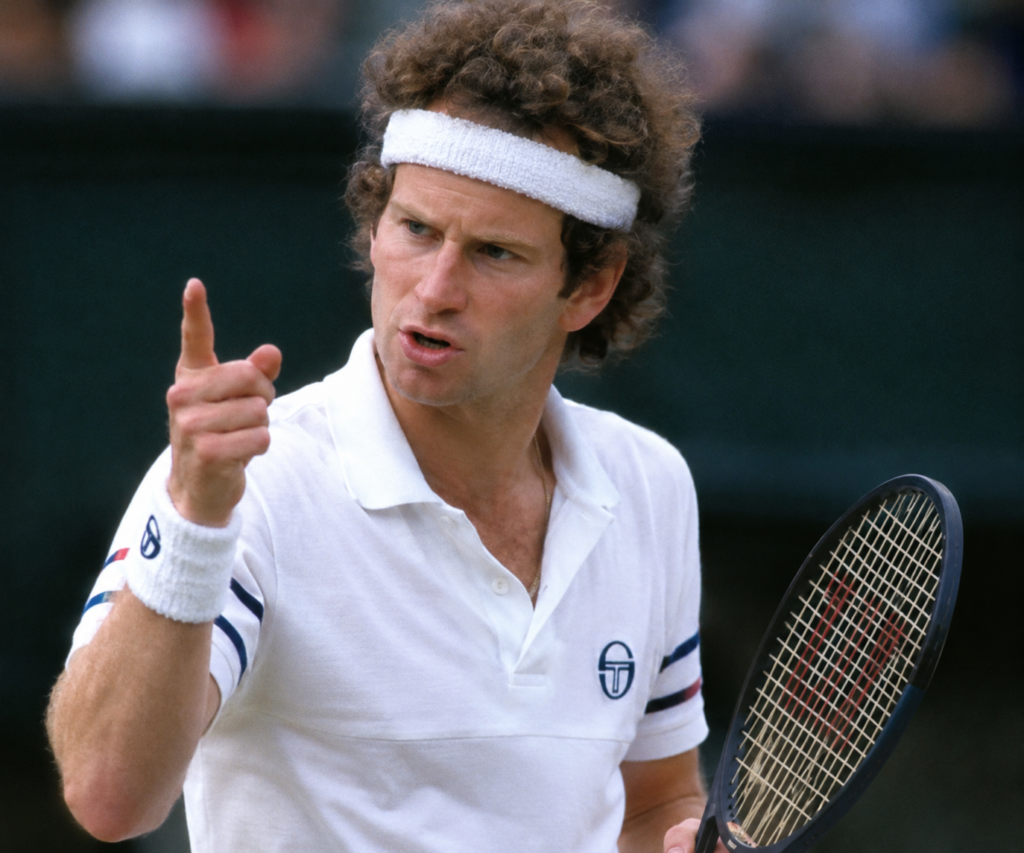

Imagine watching a tennis match where every point feels like a battle, every decision matters, and the player is just as famous for his fiery personality as his incredible skills. That is the kind of excitement I associate with John McEnroe. He was never the type of player to quietly accept everything that happened on the court. He questioned decisions, challenged opponents, and played tennis with an intensity that made people want to keep watching.
When I think about the greatest tennis players in history, McEnroe stands out for more than his trophies. His exceptional touch, sharp volleys, and unpredictable personality helped make him one of the most recognizable figures in professional tennis.
In this article, I’ll explore John McEnroe’s early life, tennis career, major achievements, personal life, and success after retirement. Whether you are a longtime tennis fan or someone discovering his story for the first time, there is plenty to appreciate about his journey.
Who Is John McEnroe?
John McEnroe is a former American professional tennis player widely recognized for his remarkable talent, competitive spirit, and outspoken personality. Born on February 16, 1959, in Wiesbaden, West Germany, he grew up to become one of the most successful players of his generation.
His family later settled in the United States, where he developed his interest in tennis. McEnroe showed impressive ability at a young age, and his skills quickly attracted attention in the competitive tennis world.
What made him different was his playing style. While many players relied heavily on power, McEnroe used exceptional hand-eye coordination, clever shot placement, and outstanding net play to control matches.
He also became famous for his arguments with tennis officials. These confrontations sometimes overshadowed his achievements, but they became an unmistakable part of his public image.
John McEnroe’s Early Life and Tennis Beginnings
McEnroe spent much of his childhood in the New York area after his family moved to the United States. He began playing tennis as a young boy and gradually developed the skills that would eventually take him to the highest level of the sport.
As I look at the careers of great athletes, one thing I find interesting is how early habits can influence future success. McEnroe’s development demonstrates the importance of practice, competitive experience, and learning how to perform under pressure.
His Breakthrough as a Young Player
In 1977, McEnroe made an impressive run at Wimbledon. At just 18 years old, he reached the semifinals of the men’s singles tournament after coming through the qualifying rounds.
That performance introduced him to a much wider audience. Although he did not win the championship, his run showed that he could compete against some of the world’s best players.
He later attended Stanford University and won the NCAA singles championship in 1978. However, his professional career soon became the main focus of his life.
His rapid rise was an early sign that he was not simply a promising young athlete. He had the ability to become a dominant force in men’s tennis.
John McEnroe’s Professional Tennis Career
McEnroe turned professional in 1978 and quickly established himself as one of the leading players on the men’s tour. His game was built around precision rather than overwhelming power.
He was particularly dangerous on grass and indoor courts, where his serve-and-volley approach allowed him to move forward and finish points quickly.
Grand Slam Championships
One of the strongest measures of McEnroe’s success is his Grand Slam record. He won seven Grand Slam singles titles during his career.
His major singles victories included:
- Wimbledon: 1981, 1983, and 1984.
- US Open: 1979, 1980, 1981, and 1984.
His 1984 season was especially memorable. McEnroe reached an extraordinary level of performance and finished the year with an 82–3 match record, one of the most remarkable winning percentages in men’s tennis history.
He also enjoyed enormous success in doubles, winning nine men’s doubles Grand Slam titles and one mixed doubles Grand Slam title. His achievements across singles and doubles highlight just how complete a player he was.
The Famous Rivalry With Björn Borg
McEnroe’s rivalry with Swedish tennis star Björn Borg became one of the defining stories of professional tennis.
Their personalities seemed completely different. Borg was known for his calm expression and controlled temperament, while McEnroe was expressive, emotional, and outspoken.
Their contrasting styles created unforgettable matches. The 1980 Wimbledon final, in particular, remains one of the most celebrated contests in tennis history. Borg eventually won the match in five sets after a dramatic fourth-set tiebreak.
I think this rivalry demonstrates something important about sports: different personalities can create extraordinary competition. Fans were drawn not only to the quality of the tennis but also to the contrast between the two champions.
McEnroe later won the Wimbledon title in 1981, defeating Borg in the final and ending Borg’s five-year winning streak at the tournament.
What Made John McEnroe Such a Special Player?
McEnroe’s talent went far beyond his Grand Slam titles. His technique was unusual, his reactions were incredibly quick, and he could produce remarkable shots from difficult positions.
A Master of Serve-and-Volley Tennis
During his best years, McEnroe was one of the finest serve-and-volley players the sport had ever seen. He often served and immediately moved toward the net, forcing his opponent to make a difficult passing shot.
His strengths included:
- Exceptional touch: He could hit delicate volleys that barely cleared the net.
- Creative shot-making: He regularly surprised opponents with angles and changes of pace.
- Quick reflexes: His reactions made him particularly dangerous near the net.
- Tactical intelligence: He understood how to disrupt an opponent’s rhythm and exploit weaknesses.
One lesson I take from studying McEnroe’s game is that success does not always come from being the strongest or fastest person in the room. Sometimes, understanding your strengths and using them intelligently can make the biggest difference.
John McEnroe’s Temper and Controversies
It would be impossible to discuss McEnroe without mentioning his temper. Throughout his career, he became famous for arguing with umpires and challenging decisions he believed were unfair.
His emotional outbursts created some of the most memorable moments in tennis history. His confrontations could be entertaining for spectators, but they also attracted criticism and occasionally resulted in penalties.
Did His Temper Help or Hurt Him?
The answer is complicated. McEnroe’s competitive fire was part of what made him such a fierce competitor. He cared deeply about winning and was never afraid to express his frustration.
However, emotional reactions can also distract athletes from their goals. In tennis, where concentration is essential on every point, losing focus can quickly change the direction of a match.
Here are three practical lessons I believe players can learn from his career:
- Control your emotions: Frustration is natural, but allowing it to dominate your decisions can hurt performance.
- Focus on the next point: A disputed call cannot be changed, so attention should return to the game.
- Compete with confidence: Standing up for yourself matters, but knowing when to move forward is equally valuable.
Despite his reputation, McEnroe’s legacy cannot be reduced to his arguments. His remarkable achievements demonstrate the extraordinary ability behind the fiery personality.
John McEnroe’s Net Worth and Sources of Income
John McEnroe built his wealth through professional tennis, endorsements, broadcasting, business activities, and other entertainment projects.
Although estimates of his net worth vary between online sources, he is generally considered a wealthy former athlete. It is important to remember that celebrity net worth figures are estimates rather than verified statements of personal finances.
How Did He Make His Money?
McEnroe’s financial success comes from several sources.
- Tennis prize money: He earned substantial prize money during his professional career, including from his Grand Slam victories.
- Brand endorsements: His fame and distinctive personality made him an attractive figure for commercial partnerships.
- Television commentary: After his playing career, he became a familiar voice on tennis broadcasts.
- Exhibitions and senior tennis: He has continued to participate in tennis events and matches that keep him connected to the sport.
- Books and entertainment: His autobiography and appearances in television and film have contributed to his public profile.
Personally, I find his career after retirement particularly interesting. Some athletes struggle to remain relevant when their competitive careers end, but McEnroe found ways to turn his experience and personality into a lasting professional identity.
John McEnroe’s Personal Life and Family
Away from tennis, McEnroe has built a family life and pursued interests beyond sports. He married actress Tatum O’Neal in 1986, and they had three children before divorcing in 1994.
In 1997, he married musician Patty Smyth. They have two daughters together, and their family life has remained a part of his story outside professional tennis.
McEnroe has also developed a strong interest in music and art. He is known for his guitar playing and has been involved in the New York art scene, demonstrating that his interests extend well beyond the tennis court.
His life illustrates how a person can develop different passions while maintaining a connection to the activity that first made them famous.
John McEnroe’s Career After Retirement
McEnroe stepped away from full-time professional singles competition in the early 1990s, but he never completely left tennis.
He became a respected commentator and analyst, offering insights into tactics, player psychology, and the demands of professional competition.
His direct communication style translated naturally to television. He could explain complicated tennis situations in accessible language while still providing the passionate opinions fans expected from him.
He has also participated in senior tennis competitions and exhibition matches, allowing audiences to enjoy his skills long after his peak competitive years.
Beyond tennis, McEnroe has appeared in entertainment projects and documentaries. His personality and unmistakable voice have made him a recognizable figure even among people who rarely watch professional tennis.
The Lasting Legacy of John McEnroe
McEnroe’s influence on tennis is about more than his seven singles Grand Slam championships. He helped define an era when serve-and-volley tennis was a dominant strategy, and his performances demonstrated how precision and anticipation could overcome raw power.
His achievements in doubles also deserve recognition. Many players become known for one discipline, but McEnroe reached the top of both singles and doubles competition.
His career also reminds us that greatness does not require perfection. He had flaws, faced criticism, and experienced difficult moments, yet his extraordinary skill and determination earned him a permanent place among tennis’s most memorable champions.
Modern tennis has changed significantly, with powerful baseline play and advanced equipment shaping the game. Still, watching McEnroe’s best performances offers a valuable reminder of the importance of touch, timing, creativity, and tactical awareness.
Conclusion
John McEnroe remains one of the most fascinating figures in tennis history. His seven Grand Slam singles titles, remarkable doubles achievements, unforgettable rivalry with Björn Borg, and extraordinary 1984 season established his place among the sport’s great champions.
His temper often attracted headlines, but his achievements reveal a much bigger story: a gifted athlete who combined intelligence, creativity, and determination to reach the highest level of professional tennis.
What I find most inspiring about McEnroe is how he continued building his career after retirement. Through commentary, exhibitions, and other interests, he showed that an athlete’s influence does not have to end when competition does.