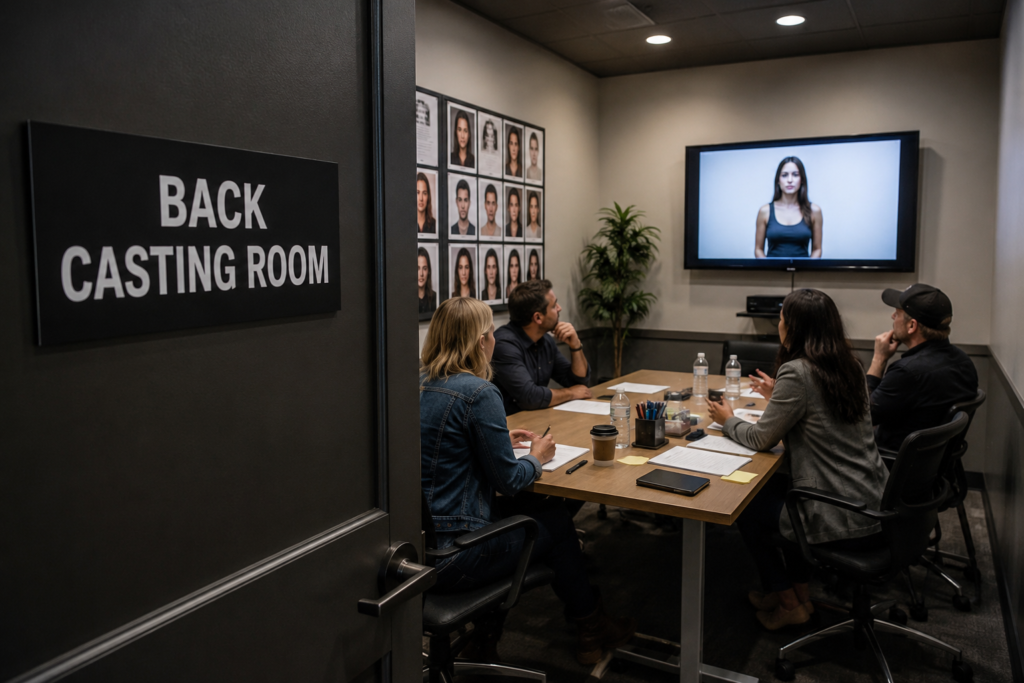

The first time I heard someone mention a back casting room, I had no clue what they meant. I imagined it was just another waiting room hidden behind the main audition area. Later, after talking with people who had worked on film productions and attending a few casting events myself, I realized it played a much more important role than I had expected.
If you’re new to the entertainment industry, you’ve probably come across unfamiliar terms that make everything sound more complicated than it really is. That’s exactly why I wanted to write this guide. I’ll explain what a back casting room is, how it works, and why it’s such an important part of the casting process.
Whether you’re an aspiring actor, model, content creator, or simply curious about behind-the-scenes filmmaking, this guide should answer your questions in a simple and practical way.
What Is a Back Casting Room?
A back casting room is generally a private area used during the casting process where casting directors, producers, and creative team members review auditions, discuss performers, or conduct callback sessions away from the main audition space.
Unlike the public waiting area, this room is usually reserved for decision-makers and selected talent.
Depending on the production, it may be used for:
- Reviewing audition recordings
- Conducting callback interviews
- Discussing casting decisions
- Meeting with directors and producers
- Finalizing actor selections
Every production company has its own workflow, so the exact purpose may vary slightly.
Why Is a Back Casting Room Important?
Casting isn’t simply about choosing the most talented performer.
Directors also consider:
- Personality
- Camera presence
- Chemistry with other actors
- Professionalism
- Availability
- Suitability for the role
The back casting room provides a quiet, private environment where these decisions can be made without distractions.
In my experience, many people think casting decisions happen instantly after an audition. In reality, there are often long discussions before anyone gets selected.
What Happens Inside a Back Casting Room?
Although every production works differently, the process usually includes several important steps.
Reviewing Auditions
Casting teams watch recorded auditions again.
Sometimes an actor who didn’t stand out initially looks much stronger after a second viewing.
Comparing Candidates
The team compares multiple performers side by side.
They may discuss:
- Acting ability
- Voice quality
- Facial expressions
- Screen presence
- Overall fit
Callback Sessions
Some productions invite selected actors back for another reading.
These callback auditions often happen in a more private setting than the original casting session.
Final Discussions
Directors, producers, and casting professionals exchange opinions before making their final decision.
This collaborative process helps ensure the best actor is selected.
Who Usually Enters the Back Casting Room?
Access is normally limited.
You’ll typically find:
- Casting directors
- Film directors
- Producers
- Assistant casting staff
- Talent agents (occasionally)
- Selected actors during callbacks
Family members, friends, and unnecessary visitors are usually not allowed inside.
My First Impression
I remember attending a local commercial audition where everyone seemed nervous.
People waited outside while names were called one by one.
At one point, I noticed several actors being invited into another room after their audition. Later I learned that this was being used for callback evaluations.
It reminded me that not everything happens in front of the camera. Some of the biggest decisions are made quietly behind closed doors.
How Actors Can Prepare
If you’re invited into a back casting room, don’t panic.
Instead, focus on being professional.
Here are a few simple tips:
Stay Relaxed
Casting professionals want to see the real you.
Take a deep breath and answer questions naturally.
Be Ready for Direction
Sometimes you’ll be asked to perform the same scene differently.
Stay flexible.
Dress Appropriately
Wear clothing that suits the character without becoming a costume.
Simple usually works best.
Listen Carefully
Many actors focus so much on acting that they forget to listen.
Pay attention to instructions before beginning.
Common Mistakes to Avoid
Even talented performers can hurt their chances.
Avoid these mistakes:
- Arriving late
- Interrupting casting directors
- Overacting
- Forgetting your lines without recovering calmly
- Looking unprepared
- Being overly nervous
Confidence and professionalism often leave a stronger impression than perfection.
Back Casting Room vs Waiting Room
Many beginners confuse these two areas.
| Waiting Room | Back Casting Room |
|---|---|
| Open to audition participants | Limited access |
| Actors wait for their turn | Casting discussions happen |
| Public environment | Private workspace |
| Minimal decision-making | Final evaluations take place |
Understanding the difference helps reduce confusion during auditions.
Technology Has Changed Modern Casting
Today’s casting process is much more digital than it used to be.
Many productions now use:
- Self-tape auditions
- Online casting platforms
- Video conferencing
- Digital audition databases
- Cloud storage for audition footage
Even with these advances, production teams often gather in a private room—physical or virtual—to review performances together.
Personal Tip #1
One lesson I’ve learned is that first impressions matter, but they aren’t everything.
I’ve spoken with casting professionals who admitted they changed their minds after reviewing audition footage later. That’s why it’s important to give every audition your best effort from start to finish.
Personal Tip #2
Don’t assume you performed poorly just because you weren’t given immediate feedback.
Silence doesn’t always mean rejection.
Casting teams frequently need time to compare dozens—or even hundreds—of auditions before making a final decision.
Patience can be one of the hardest parts of the process.
Related Terms You May Hear
If you’re researching back casting room, you may also come across these related keywords:
- Casting room
- Casting audition process
- Callback audition
- Film production casting
- Casting director
Understanding these terms makes navigating the entertainment industry much easier.
Is the Back Casting Room Only for Movies?
Not at all.
You’ll find similar spaces used in:
- Television productions
- Commercial advertising
- Fashion modeling
- Theater productions
- Music videos
- Reality TV
- Corporate video projects
Any production that requires talent selection may have a private casting evaluation area.
Final Thoughts on the Back Casting Room
The back casting room may not be the most glamorous part of film or television production, but it’s one of the most important.
It’s where thoughtful conversations happen, performances are reviewed, and final decisions begin to take shape. As someone who has learned more about the casting process over time, I’ve realized that success isn’t only about delivering a great audition—it’s also about professionalism, patience, and preparation.
If you’re dreaming of working in the entertainment industry, understanding how a back casting room fits into the overall casting process can give you more confidence the next time you step into an audition.
Every audition is a learning opportunity, and every experience helps you grow.