
I still remember scrolling through social media after a major news story involving a serious accident. Within minutes, my feed was filled with law firm ads promising huge settlements and quick legal help. At first, I understood why those ads appeared. People needed legal guidance. But after seeing the same message repeated over and over, it started to feel uncomfortable.
That experience made me think more deeply about social media harm legal marketing. Where is the line between offering genuine legal support and taking advantage of someone’s difficult moment? It’s a question that many lawyers, marketers, and even potential clients are asking today.
In this article, I’ll share what I’ve learned about ethical legal marketing, the risks of getting it wrong, and practical ways law firms can build trust while still growing their business.
What Is Social Media Harm Legal Marketing?
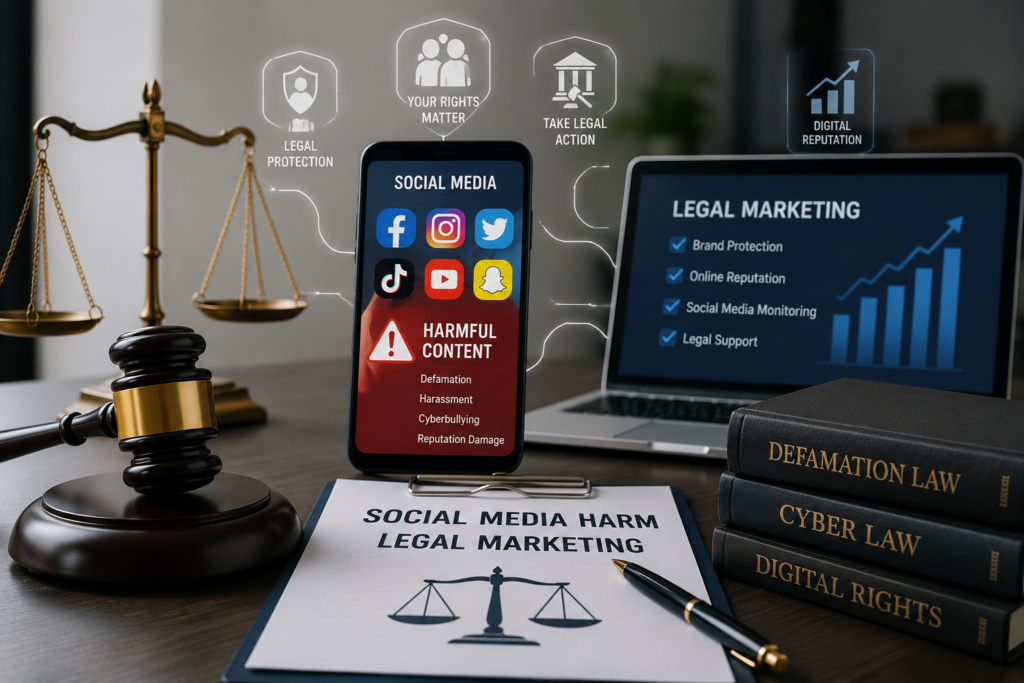
Social media harm legal marketing refers to the strategies law firms use on platforms like Facebook, Instagram, LinkedIn, TikTok, and X to reach people who may have experienced physical, emotional, financial, or reputational harm.
These campaigns often focus on:
- Personal injury cases
- Medical malpractice
- Product liability
- Workplace accidents
- Consumer protection
- Data privacy violations
- Defamation or online harassment
The goal isn’t necessarily the problem. Most people genuinely need legal information after a harmful event. The challenge is how that information is presented.
When marketing becomes overly emotional, misleading, or aggressive, it can damage both public trust and the reputation of the legal profession.
Why Social Media Has Changed Legal Marketing
Years ago, most people searched for lawyers through referrals or local directories.
Today, many people search online the moment something happens.
A quick Google search often leads them to social media, where educational videos, client testimonials, and legal tips appear almost instantly.
This creates incredible opportunities for law firms, but it also increases responsibility.
Social media moves fast. Emotions run high. That combination requires careful communication.
The Fine Line Between Education and Exploitation
One thing I’ve noticed is that audiences are surprisingly good at spotting marketing that feels insincere.
There’s a huge difference between these two approaches:
Ethical Approach
- Explains legal rights
- Provides educational content
- Encourages consultation without pressure
- Uses respectful language
- Focuses on helping people make informed decisions
Harmful Approach
- Uses fear to generate leads
- Makes unrealistic promises
- Pressures victims into immediate action
- Exploits breaking news
- Suggests guaranteed compensation
People remember how a brand makes them feel.
Trust is far more valuable than a temporary spike in clicks.
Common Mistakes in Social Media Harm Legal Marketing
I’ve reviewed dozens of legal campaigns over the years, and several mistakes appear repeatedly.
Chasing Every Trending Story
Some firms create advertisements immediately after accidents or disasters.
While timing matters, appearing overly eager can make a firm look opportunistic.
Making Big Promises
Statements like:
- “We’ll win your case.”
- “Guaranteed compensation.”
- “Maximum payout.”
can create unrealistic expectations and may even violate advertising regulations.
Forgetting the Human Side
Legal marketing should remember that behind every case is a real person facing stress, uncertainty, and sometimes grief.
Compassion should always come before conversion rates.
Ignoring Platform Rules
Every social media platform has advertising policies.
Law firms also need to follow professional advertising rules established by their local legal authorities.
Ignoring these guidelines can lead to removed ads—or worse.
Focus on Helping Before Selling
One strategy I’ve seen work consistently is creating educational content before promoting services.
Instead of saying,
“Call us today.”
Try explaining:
- What legal rights someone has
- What documents they should keep
- Common mistakes after an accident
- When to contact an attorney
People appreciate useful information.
Ironically, helpful content often generates more qualified clients than aggressive advertising.
Building Trust Through Educational Content
Educational content is one of the strongest forms of legal marketing today.
Ideas include:
Short Videos
Explain topics such as:
- What happens after filing a claim
- Insurance company tactics
- Personal injury timelines
- Evidence collection
Infographics
Visual guides can simplify complicated legal processes.
Frequently Asked Questions
Answer questions like:
- How long do I have to file a claim?
- Should I talk to the insurance company?
- What documents should I save?
Simple answers build confidence.
Related Keywords That Naturally Support SEO
When writing about social media harm legal marketing, it’s helpful to naturally include related topics such as:
- legal marketing strategies
- law firm social media
- ethical legal advertising
- personal injury marketing
- digital marketing for lawyers
These related keywords help search engines better understand the content without making it sound repetitive.
Why Authenticity Matters More Than Ever
Today’s audiences are skeptical.
They’ve seen enough exaggerated advertising to recognize when something feels fake.
One thing I’ve personally learned while creating online content is that authenticity almost always wins.
If your message sounds like it was written for people instead of algorithms, readers stay longer.
They trust more.
And they’re much more likely to contact you when they actually need help.
Share Real Expertise Instead of Sales Messages
If I were running legal social media accounts every day, I’d spend less time designing flashy advertisements and more time answering common legal questions.
People don’t always need a lawyer immediately.
Sometimes they simply need clarity.
When your content provides that clarity, your firm becomes memorable.
Later, when legal representation becomes necessary, they’ll already know whom they trust.
Best Practices for Ethical Social Media Harm Legal Marketing
Here are practices every law firm should consider:
- Put education before promotion.
- Be transparent about legal outcomes.
- Avoid emotional manipulation.
- Respect victims and sensitive events.
- Use plain language instead of legal jargon.
- Clearly disclose advertisements.
- Stay compliant with advertising regulations.
- Respond professionally to comments and messages.
- Protect client privacy.
- Continuously review content for accuracy.
These habits build a stronger long-term reputation.
Measuring Success Beyond Clicks
Many marketers focus only on numbers like:
- Click-through rate
- Impressions
- Leads
- Cost per click
Those metrics matter.
But for legal marketing, trust indicators are just as important.
Look at:
- Positive comments
- Shares of educational posts
- Time spent reading articles
- Repeat website visitors
- Consultation quality
Sometimes fewer leads result in better clients.
The Future of Social Media Harm Legal Marketing
Social media keeps changing.
New platforms appear.
Algorithms evolve.
Advertising rules become stricter.
Despite all those changes, one principle will probably never disappear:
People prefer honest businesses.
Law firms that consistently educate, communicate respectfully, and provide real value will likely outperform those relying on fear-based marketing.
Trust compounds over time.
That’s something no advertising budget can replace.
Final Thoughts on Social Media Harm Legal Marketing
Understanding social media harm legal marketing isn’t just about generating leads. It’s about building relationships with people during some of the most difficult moments of their lives.
The firms that succeed are usually the ones that communicate with empathy, provide accurate information, and avoid sensational tactics.
From everything I’ve observed, ethical marketing isn’t just the right thing to do—it also creates stronger client relationships and a better reputation over the long run.
If you’re developing a legal marketing strategy, remember this simple idea: educate first, serve honestly, and let trust become your strongest marketing tool.