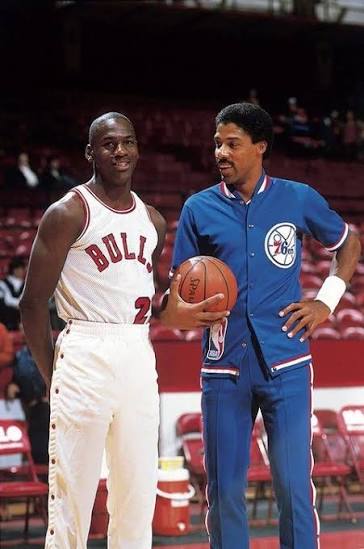

I can still remember watching old basketball highlights and wondering how some players seemed to hang in the air for an extra second. Julius Erving was one of those players. Even in old footage, there was something different about the way he moved. He didn’t simply jump toward the basket. It looked like he was floating there.
That is probably why so many basketball fans still talk about Julius Erving, better known as “Dr. J,” decades after his retirement.
Erving wasn’t just an incredible dunker. He was a complete basketball player who helped change the way fans viewed professional basketball. From his days in the ABA to his championship career with the Philadelphia 76ers, his journey is filled with unforgettable moments, impressive achievements, and lessons about confidence and consistency.
Who Is Julius Erving?
Julius Erving was born on February 22, 1950, in East Meadow, New York. He became one of the most influential basketball players of his generation and eventually earned a place in the Naismith Memorial Basketball Hall of Fame.
What makes his career especially interesting is that it wasn’t limited to the NBA.
Before becoming a Philadelphia 76er, Erving spent five seasons playing professional basketball in the American Basketball Association. He played for the Virginia Squires and later the New York Nets.
During those ABA years, he became one of the league’s biggest stars.
His combination of athleticism, creativity, scoring ability, and above-the-rim play helped make him one of the most recognizable athletes of the era.
Julius Erving and the ABA
When people talk about Julius Erving today, they often focus on his NBA career. Personally, I think his ABA years deserve just as much attention.
Erving entered professional basketball in 1971 with the Virginia Squires. He quickly showed that he was something special.
He later joined the New York Nets, where his reputation grew even more.
Becoming the Face of the ABA
Erving wasn’t simply putting up impressive numbers. He was giving fans a reason to watch.
His style was exciting and unpredictable. He could attack the basket, finish above defenders, rebound, defend, and create spectacular plays seemingly out of nowhere.
During his five ABA seasons, Erving won:
- Three ABA MVP awards
- Three ABA scoring titles
- Two ABA championships
- The 1976 ABA Slam Dunk Contest
His second ABA championship came in 1976, when the New York Nets defeated the Denver Nuggets in the final championship series in ABA history.
That season became an important part of his legacy.
The Style That Made Dr. J Famous
For me, this is the most fascinating part of Julius Erving’s story.
There were plenty of talented players before him, but Erving helped make above-the-rim basketball feel like an art form.
His long strides, enormous hands, body control, and ability to stay in the air made his moves look almost effortless.
He could finish with powerful dunks, graceful finger rolls, and creative layups that seemed impossible from certain angles.
The nickname “Dr. J” became closely connected to that unique style.
More Than Just a Dunker
It would be unfair to describe Erving simply as a great dunker.
He was an outstanding all-around player.
He could score from different areas of the court, rebound strongly for a forward, defend, pass, and create opportunities for teammates.
That’s something I think is important when looking at old sports stars. Highlights can sometimes hide the complete picture.
A player may become famous for one spectacular skill, but greatness usually comes from having many skills working together.
Erving was a perfect example.
Julius Erving Joins the Philadelphia 76ers
In 1976, the ABA and NBA merged, and Julius Erving moved to the Philadelphia 76ers.
This was the beginning of another important chapter.
Philadelphia already had talented players, but Erving quickly became the centerpiece of the franchise.
He spent 11 seasons with the 76ers and was selected to the NBA All-Star Game every season he played in the league.
That kind of consistency is something I personally find more impressive than one great season.
Anyone can have a breakout year.
Doing it year after year is much harder.
Julius Erving’s NBA Success
Erving continued to establish himself as one of basketball’s best players after entering the NBA.
In 1981, he won the NBA Most Valuable Player award after another outstanding season.
He was also named to multiple All-NBA teams and became one of the most recognizable athletes in professional sports.
But there was still one major goal left.
An NBA championship.
The 1983 NBA Championship
The Philadelphia 76ers finally reached the top in 1983.
With Erving leading the team and Moses Malone playing a major role, Philadelphia dominated the postseason.
The Sixers eventually faced the Los Angeles Lakers in the NBA Finals.
Instead of another dramatic series, Philadelphia swept Los Angeles 4–0.
For Erving, it was the NBA championship he had been waiting for.
That moment completed an important part of his professional career.
He had already won championships in the ABA. Now he had an NBA title as well.
The Famous “Baseline Move”
If you search for Julius Erving highlights, one moment almost always appears.
It happened during the 1980 NBA Finals against the Los Angeles Lakers.
Erving drove along the baseline and appeared to have nowhere to go. Instead of stopping, he continued behind the backboard before somehow finishing the shot on the other side of the basket.
The move became one of the most famous plays in NBA history.
What I like about this moment is that it wasn’t just about athletic ability.
It showed confidence, creativity, balance, and an understanding of body movement.
It also showed why fans loved watching him.
You never quite knew what he was going to do next.
Julius Erving’s Influence on Basketball
Julius Erving helped influence generations of basketball players.
His style became especially important as the NBA moved toward a faster, more athletic version of the game.
Young players watched Erving and realized that basketball could be both highly competitive and visually exciting.
His influence can be seen in the playing styles of many future stars.
The emphasis on:
- Powerful dunks
- Creative finishes
- Athletic forwards
- Above-the-rim basketball
- Individual expression
became increasingly important in professional basketball.
In many ways, Erving helped create a bridge between the older style of basketball and the modern game.
What I Can Learn From Julius Erving
One personal lesson I take from Erving’s career is the importance of developing your own identity.
He didn’t become famous by trying to play exactly like somebody else.
He had his own movement, his own rhythm, and his own approach to the game.
I’ve found the same idea useful in everyday work. When you’re learning a skill, it’s easy to copy what everyone else is doing. But eventually, you need to develop a style that feels natural to you.
Erving did that on the basketball court.
Another Lesson: Stay Consistent
My second takeaway from his career is consistency.
Julius Erving didn’t rely on one spectacular season. He performed at an elite level for years.
For anyone building a career, business, website, or personal project, that’s a useful reminder.
Small improvements repeated over a long period can create something much bigger than one impressive moment.
Julius Erving’s Career Achievements
When looking at his complete professional career, the numbers tell an impressive story.
Some of his major achievements include:
- Three ABA MVP awards
- Two ABA championships
- Three ABA scoring titles
- 1976 ABA Slam Dunk Championship
- 1981 NBA MVP award
- 1983 NBA championship
- 11 NBA All-Star selections
- Multiple All-NBA selections
- Naismith Memorial Basketball Hall of Fame induction in 1993
- More than 30,000 combined ABA and NBA points
These achievements help explain why he is considered one of the greatest basketball players ever.
Life After Basketball
Julius Erving retired from professional basketball after the 1986–87 NBA season.
Retirement didn’t mean disappearing from the sport.
He remained involved in basketball through business, media, public appearances, and executive work. He also became an important ambassador for the game.
His No. 6 jersey was eventually retired by the Philadelphia 76ers, another sign of how important he became to the franchise.
Even after leaving the court, his reputation continued to grow.
Julius Erving’s Lasting Legacy
When I look at the career of Julius Erving, I don’t think his greatest achievement was one dunk or even one championship.
I think it was the way he changed the image of basketball.
He showed that a player could be powerful and graceful at the same time.
He made athleticism exciting without making the game feel less intelligent.
Most importantly, he became a symbol of a new era in professional basketball.
The Hall of Fame describes Erving as someone who redefined the forward position, and that description feels appropriate.
Final Thoughts on Julius Erving
Julius Erving’s career is one of those sports stories that becomes more interesting with time.
He dominated the ABA, became an NBA superstar, won MVP awards, captured championships, and helped influence the generations of players who came after him.
But what I remember most about Julius Erving is the feeling his game created.