
I remember hearing Machine Gun Kelly for the first time and thinking his sound was completely different from what I expected. There was something raw about his delivery, but at the same time, his music had an energy that was hard to ignore.
Over the years, I’ve watched his career move through several different phases. He started with a strong connection to hip-hop, built a loyal fan base, appeared in movies and television, and eventually made a major turn toward pop-punk.
That ability to change while still keeping his personality is one of the most interesting things about Machine Gun Kelly.
Who Is Machine Gun Kelly?
Machine Gun Kelly, whose real name is Colson Baker, is an American musician and actor from Cleveland, Ohio.
He first gained widespread attention through hip-hop, developing a fast and energetic rap style that helped him stand out from many other emerging artists.
His stage name, Machine Gun Kelly, reflects the rapid-fire style of his early performances.
What I find interesting about his story is that he didn’t stay locked into one musical category. As his career developed, he began experimenting with rock and pop-punk, eventually reaching a completely different audience.
That kind of career shift takes confidence.
Machine Gun Kelly’s Early Music Career
Before becoming a mainstream name, Kelly spent years performing and releasing music independently.
His early work helped him build a reputation as an energetic performer. Mixtapes and local performances gradually expanded his audience, and his online presence played an important role in getting his music in front of more listeners.
One thing I’ve noticed when looking at successful musicians is that their breakthrough often comes after years of work that casual fans never see.
Kelly’s story follows that pattern.
He wasn’t an overnight success. He spent years developing his sound, performing, recording, and building relationships within the music industry.
Breaking Into Mainstream Hip-Hop
Kelly’s breakthrough came when his music started attracting attention beyond Cleveland.
His energetic delivery and personal lyrics became important parts of his identity.
Songs such as “Wild Boy” helped introduce him to a much wider audience, while collaborations with other artists gave him additional exposure.
His debut studio album, Lace Up, arrived in 2012 and established him as a serious name in mainstream rap.
Machine Gun Kelly and His Musical Evolution
For me, the biggest turning point in the Machine Gun Kelly story is his move from hip-hop toward pop-punk.
Instead of simply continuing with the sound that originally made him famous, he began exploring guitar-driven music and a more emotional songwriting style.
His 2020 album Tickets to My Downfall became a major moment in that transition.
The project leaned heavily into pop-punk and featured collaborations with artists such as Travis Barker.
The change wasn’t subtle.
Why the Pop-Punk Era Stood Out
I think one reason this era connected with so many listeners was its emotional honesty.
The songs dealt with relationships, heartbreak, frustration, loneliness, and growing up. Those subjects are familiar to a huge audience.
The production also had the energy of classic pop-punk while giving it a modern sound.
For someone discovering Kelly through this period, it could almost feel like he had always been a rock artist.
Machine Gun Kelly’s Most Recognizable Songs
Kelly has released music across multiple genres, so his popular songs cover a wide range of styles.
Some notable tracks include:
- Wild Boy
- Bad Things
- My Ex’s Best Friend
- Bloody Valentine
- Lonely
- Emo Girl
- Forget Me Too
- Home
Each song represents a different stage of his career.
“Bad Things”
“Bad Things,” featuring Camila Cabello, became one of Kelly’s most recognizable mainstream songs.
The track showed a softer side of his songwriting and helped him reach listeners who may not have previously followed his rap career.
“Bloody Valentine”
“Bloody Valentine” represents the pop-punk direction particularly well.
The combination of electric guitars, energetic drums, and Kelly’s vocal performance created a sound that felt very different from his earlier hip-hop work.
Machine Gun Kelly as an Actor
Music isn’t the only area where Kelly has built a career.
He has also appeared in movies and television projects, showing that his creative interests extend beyond recording studios and concert stages.
One of his most notable film roles came in The Dirt, where he portrayed drummer Tommy Lee.
He has also appeared in projects including Bird Box, Midnight in the Switchgrass, and Good Mourning.
Personally, I think acting is an interesting extension of his career because it allows him to use a different kind of creativity.
Music is about controlling your own performance. Acting requires you to step into someone else’s character.
Machine Gun Kelly’s Fashion and Personal Style
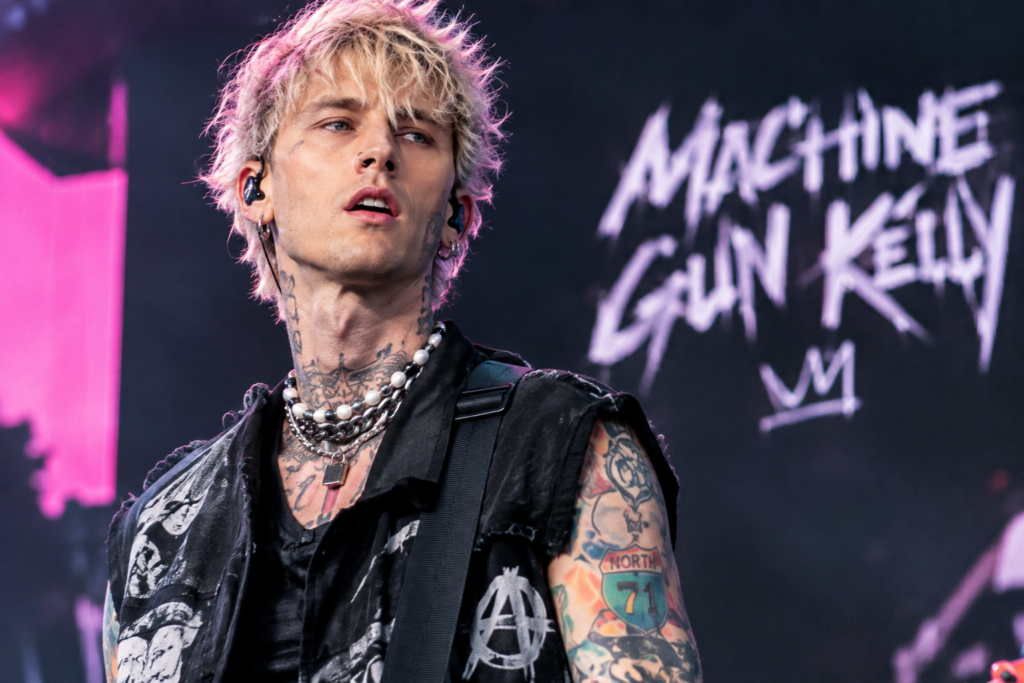
Another reason Kelly gets attention is his distinctive fashion.
Over the years, his appearance has included colorful hair, tattoos, bold clothing, jewelry, painted nails, and experimental outfits.
His style often matches the rebellious attitude associated with his music.
I’ve always found that musicians with a strong visual identity tend to become easier to recognize. Kelly definitely understands that connection between music and personal style.
His appearance isn’t separate from his brand. It’s part of the overall image.
My Favorite Thing About His Career
If I had to pick one thing I find most interesting about Machine Gun Kelly, it would be his willingness to change.
Changing genres can be risky.
When an artist becomes successful with one sound, there is often pressure to repeat that formula. Kelly went in another direction instead.
That doesn’t mean every listener will prefer every phase of his career. Music is personal.
But the willingness to experiment is something I respect.
Two Things I’ve Learned From Machine Gun Kelly’s Journey
1. Don’t Be Afraid to Experiment
One personal lesson I take from Kelly’s career is that your first successful idea doesn’t have to define you forever.
If you have another creative interest, explore it.
An artist can grow, change, and surprise the audience.
2. Build Your Own Identity
My second takeaway is the importance of having a recognizable identity.
Whether you’re a musician, writer, designer, or content creator, people remember personalities that feel distinctive.
Kelly’s music, appearance, performances, and public image all contribute to a recognizable identity.
Machine Gun Kelly’s Influence on Modern Pop-Punk
Kelly’s pop-punk success arrived during a period when the genre was finding new life with younger audiences.
His work helped bring guitar-based music back into conversations among listeners who had primarily grown up with hip-hop and mainstream pop.
That crossover is significant.
He demonstrated that audiences don’t necessarily have to choose between rap and rock. An artist can move between genres and bring fans along for the journey.
This also opened the door for more conversations about the relationship between hip-hop and pop-punk.
What Makes Machine Gun Kelly Interesting?
There are plenty of artists who stay within one lane throughout their careers.
Kelly hasn’t really followed that path.
His story includes:
- Hip-hop and rap
- Pop-punk and rock
- Acting
- Songwriting
- Fashion
- Live performances
- Collaborations with artists from different genres
That variety makes his career worth following, even if someone isn’t a fan of every project.
For me, the most interesting artists are often the ones who keep trying something new.
Final Thoughts on Machine Gun Kelly
Machine Gun Kelly has built a career around change, experimentation, and self-expression.
From his early days in Cleveland hip-hop to his mainstream rap success and later pop-punk transformation, his journey has taken several unexpected turns.
What stands out to me most is that he didn’t allow his first identity as a rapper to completely determine where his career would go.
His music continues to spark conversations about genre, creativity, fashion, and artistic reinvention.
If you’ve only heard one version of Machine Gun Kelly, I’d suggest exploring different periods of his career. Listen to some of his early rap tracks, then compare them with his pop-punk work.
You might be surprised by how much his sound has changed.