
A few years ago, I noticed something whenever I wanted to learn about a place I wasn’t visiting regularly: social media gave me plenty of information, but it was often scattered. One post talked about an event, another mentioned local news, and somewhere else I found a useful travel update.
That experience made me appreciate the value of a good newsletter.
A Cyprus newsletter can bring useful information about the island directly to your inbox instead of making you search through dozens of websites every morning. Whether you’re living in Cyprus, planning a visit, running a business there, or simply interested in the country, a well-organized newsletter can be a convenient source of information.
In this guide, I’ll explain what a Cyprus newsletter is, what you can expect from one, why people subscribe, and how to choose a newsletter that is actually worth reading.
What Is a Cyprus Newsletter?
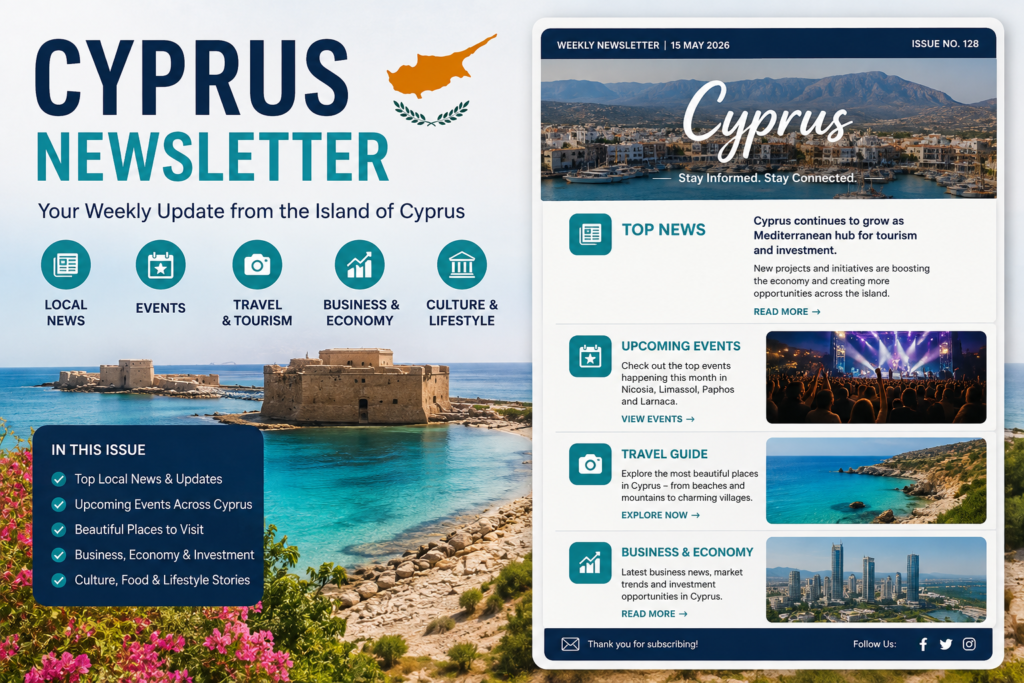
A Cyprus newsletter is a regular email publication focused on news, events, travel, business, culture, lifestyle, or other subjects connected with Cyprus.
The exact content depends on who publishes it.
Some newsletters are focused mainly on Cyprus news, while others may concentrate on tourism, local events, real estate, business, food, or expat life.
Instead of visiting several websites individually, readers can receive selected information in one place.
Typical newsletter topics can include:
- Local and national news
- Cyprus travel updates
- Business developments
- Cultural events
- Restaurants and food
- Property and real estate
- Community announcements
- Weather and seasonal information
- Tourism attractions
- Lifestyle stories
That’s what makes newsletters appealing. They can save time while still keeping readers connected to a particular place.
Why Are Cyprus Newsletters Becoming Useful?
The amount of information available online can be overwhelming.
If I search for Cyprus today, I might find hundreds of articles, videos, social media posts, and websites. The problem isn’t finding information. The problem is finding useful information.
A newsletter can solve part of that problem by selecting important stories and presenting them in a manageable format.
For someone who doesn’t have time to browse the internet every day, receiving a short email can be much easier.
A Newsletter Saves Time
Imagine checking five different websites every morning.
You might spend 30 minutes looking through headlines before finding the two stories that actually matter to you.
A good newsletter can potentially reduce that process.
Instead of searching, you open your inbox and scan the latest edition.
What Can You Find in a Cyprus Newsletter?
There isn’t one standard format.
Every publisher creates its newsletter differently, but certain categories appear frequently.
Cyprus Local News
Local news is one of the most obvious topics.
Readers may be interested in developments involving cities such as Nicosia, Limassol, Larnaca, Paphos, and Famagusta.
A useful newsletter can provide a quick overview of major developments without requiring readers to follow every local publication.
Travel and Tourism
Cyprus is well known for its beaches, historical sites, villages, food, and Mediterranean atmosphere.
A Cyprus travel newsletter may highlight:
- Places to visit
- Seasonal attractions
- Local festivals
- Travel tips
- Beaches
- Hiking opportunities
- Restaurants
- Cultural experiences
This can be particularly helpful for people planning their first trip.
Business and Economy
Cyprus also has an active business community.
A Cyprus business newsletter may cover companies, investments, entrepreneurship, technology, real estate, and economic developments.
Business readers often want information that is more focused than general news.
A specialized newsletter can make it easier to follow developments within a particular industry.
Cyprus Newsletter for Travelers
I think newsletters can be especially useful for travelers because travel planning usually involves collecting information from many different sources.
When planning a trip, I personally prefer to make a simple checklist rather than keep dozens of browser tabs open.
A newsletter can sometimes help with that process by introducing destinations, activities, and events that might otherwise be missed.
Before Your Trip
A newsletter can give you ideas about:
- Places worth visiting
- Local events happening during your stay
- Seasonal activities
- Food and cultural experiences
- Popular areas to explore
Of course, I would still verify important travel information through official sources before making a decision.
Cyprus Newsletter for Expats
Cyprus has an international community, and newsletters can be useful for people who live on the island but want a convenient way to follow local developments.
An expat newsletter in Cyprus might cover subjects such as:
- Community events
- Local services
- Lifestyle
- Business
- Housing
- Cultural activities
- Local regulations
- Community news
The most useful newsletters are usually those that understand what their readers actually need.
How to Choose a Good Cyprus Newsletter
Not every newsletter deserves a permanent place in your inbox.
Some provide genuinely useful information. Others simply repeat headlines or send too many promotional emails.
When choosing one, I recommend checking a few things.
1. Look at the Topics
First, ask yourself what you actually want.
Are you interested in:
- News?
- Travel?
- Business?
- Food?
- Property?
- Events?
- Lifestyle?
Choose a newsletter that matches your interests.
2. Check How Frequently It Arrives
More emails don’t necessarily mean better information.
A daily newsletter can be useful for people who want frequent news updates. A weekly edition may be better if you prefer a relaxed overview.
Personally, I prefer newsletters that respect my inbox.
3. Look at the Writing Quality
A good newsletter should be easy to scan.
Clear headings, short paragraphs, useful links, and straightforward language make a big difference.
If every edition feels like a huge wall of text, you’re less likely to read it regularly.
My Personal Tips for Reading Newsletters
I’ve learned a couple of simple habits that make newsletters much more useful.
Tip 1: Don’t Read Everything
You don’t need to read every article.
I usually scan the headings first and open only the stories that are relevant to me.
This turns a 10-minute reading session into something much quicker.
Tip 2: Keep Useful News Organized
If a newsletter regularly sends useful travel or business information, save important articles in a folder or bookmark them.
Otherwise, you’ll eventually find yourself searching through hundreds of emails trying to remember where you saw something.
Cyprus Newsletter and Local Events
Events can be another valuable part of a newsletter.
Cyprus has a diverse calendar that can include cultural celebrations, concerts, exhibitions, food festivals, sporting activities, and community gatherings.
For residents, these updates can make it easier to discover what’s happening nearby.
For visitors, they can turn an ordinary trip into a more memorable experience.
Imagine visiting Cyprus and discovering that a local cultural festival is taking place during your stay. That’s the kind of information that can make a newsletter worthwhile.
Why Businesses Use Newsletters
Newsletters aren’t only useful for readers.
Businesses can also use them to communicate directly with an audience.
A company might use a newsletter to announce:
- New products
- Special offers
- Company news
- Events
- Industry updates
- Educational content
- New services
Unlike a social media post, an email arrives directly in someone’s inbox.
That doesn’t guarantee that people will read it, of course, but it provides another way to maintain a relationship with customers.
Building a Cyprus Newsletter
If you’re considering creating your own newsletter, start small.
You don’t need an enormous publication from day one.
A Simple Structure
A basic edition could look like this:
1. Welcome message
A short introduction to the week’s edition.
2. Top Cyprus story
Highlight one important or interesting development.
3. Local feature
Share a business, destination, person, or cultural story.
4. Upcoming events
Mention useful events and activities.
5. Recommended reading
Add a few carefully selected articles.
6. Closing message
Invite readers to share feedback or suggest topics.
This structure is simple, but that’s actually a strength.
Readers know where to look for the information they want.
Common Mistakes to Avoid
If you’re publishing a newsletter, there are several mistakes worth avoiding.
Sending Too Frequently
Nobody wants an inbox filled with unnecessary messages.
Only send information when you have something useful to share.
Using Clickbait Headlines
A headline should tell readers what the article is actually about.
Overly dramatic headlines might get clicks once, but they can reduce trust over time.
Making Emails Too Long
A newsletter should guide readers toward useful information rather than overwhelm them.
Short sections and clear links usually work better than enormous blocks of text.
Ignoring Mobile Readers
Many people read email on their phones.
Make sure your newsletter looks good on a small screen, with readable text and easy-to-tap links.
The Future of Cyprus Newsletters
I think newsletters will remain useful even as social media and other platforms continue changing.
The biggest advantage is control.
When you subscribe to a newsletter, you intentionally choose to receive information from a particular publisher.
There’s less dependence on an algorithm deciding what you should see.
That doesn’t mean newsletters will replace websites or social media. Instead, they can work alongside them.
A website provides detailed information, social media provides quick updates and conversation, while a newsletter can act as a convenient summary.
Final Thoughts on Cyprus Newsletter
A Cyprus newsletter can be a simple but effective way to stay connected with the island.
Whether you’re interested in Cyprus news, travel, business, culture, events, or everyday lifestyle information, the right newsletter can save time and help you discover useful stories.
My biggest advice is to choose quality over quantity.
Don’t subscribe to ten newsletters just because they sound interesting. Start with one or two that genuinely match your interests. Give them a few weeks and see whether you actually find yourself opening the emails.
For publishers, the lesson is just as simple: respect your readers’ time, provide useful information, and keep the writing clear.